
## Introduction
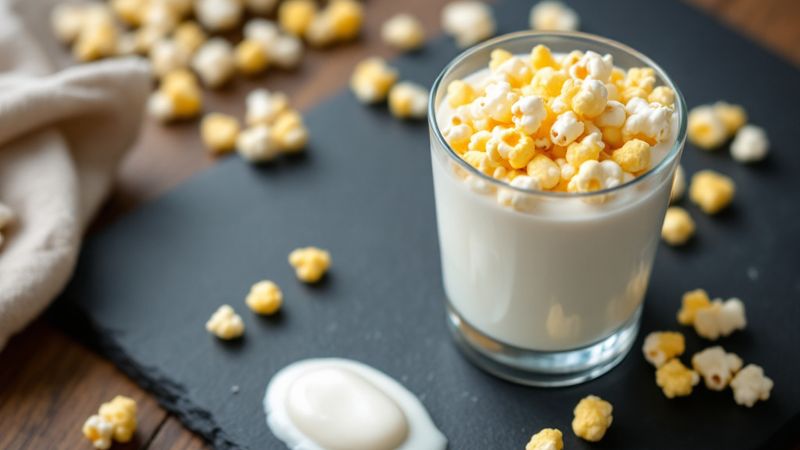
The Italian market for popcorn milk is dominated by two historical giants: Parmalat and Granarolo. Both offer long-life UHT versions designed to be poured over freshly popped popcorn, ensuring a creaminess that enhances the flavor of the most beloved cinema snack. In this comparison, we analyze the production philosophy, the origin of raw materials, the nutritional profile, the ingredient list, and the additives present, to help you choose the solution best suited to your needs.
## Key Differences at a Glance
Parmalat, part of the Lactalis group, positions itself as a global brand with a strong presence in major distribution channels. Its philosophy focuses on scale efficiency and standardization: the milk supply chain is centralized, with certified farms in various Italian regions but logistics that prioritize maximum product homogeneity. Granarolo, a dairy cooperative, instead emphasizes short supply chains and sustainability. The milk comes almost exclusively from Italian member farmers, with a strong commitment to animal welfare and traceability.
From a raw material perspective, both companies declare “Italian whole milk” on the label, but Granarolo specifies that the milk is confirmed by member cooperators and comes from areas with “high-quality forage.” Parmalat, while using Italian milk, also includes a small portion of milk from foreign facilities in its composition to ensure supply continuity.
Finally, packaging policies differ: Parmalat typically uses 1 L PET plastic bottles, optimized for large-scale transport; Granarolo prefers Tetra Pak cartons, which are more recyclable and have a reduced environmental impact, in line with its environmental sustainability strategy.

## Head-to-Head Nutritional Comparison
| Nutrient (per 100 ml) | Parmalat (UHT whole milk) | Granarolo (UHT whole milk) |
|---|---|---|
| Energy | 62 kcal | 61 kcal |
| Protein | 3.2 g | 3.3 g |
| Total Fat | 3.5 g | 3.6 g |
| – of which saturated | 2.2 g | 2.3 g |
| Carbohydrates | 4.8 g (lactose) | 4.7 g (lactose) |
| Sugars | 4.8 g | 4.7 g |
| Salt | 0.12 g | 0.10 g |
| Vitamin A | 45 µg | 48 µg |
| Calcium | 120 mg | 122 mg |
The values are taken from the official technical sheets of each brand and are practically equivalent, with a slight difference in favor of Granarolo for calcium and vitamin A, likely due to a slightly higher fat concentration. For those who use milk on popcorn, the caloric difference is negligible: 100 ml added to a medium portion of popcorn (30 g) increases the energy intake by approximately 60 kcal, maintaining a good balance between proteins and fats.
To learn more about using milk in homemade popcorn, check out our guide on Homemade Popcorn: Spring Benefits.
## In-Depth Ingredient Analysis
Parmalat – Whole UHT Milk
- Whole cow's milk (at least 3.5% fat)
- Vitamin A (retinol) – added to meet minimum legal levels
- Vitamin D3 (cholecalciferol) – mandatory fortification
Granarolo – Whole UHT Milk
- Whole cow's milk from cooperative members (at least 3.5% fat)
- Vitamin A (retinol) – added in compliance with EU Reg. 1925/2006
- Vitamin D3 (cholecalciferol) – same as above
Both products contain no added sugars, thickeners, colorants, or flavors. The list is minimalist, in line with “clean-label” trends.
### Additives and Technological Co-adjuvants
The only substances added are vitamins A and D3, coded respectively as E160a and E330 (solely for the stabilization of vitamin D). Both additives are authorized by the EFSA and considered safe at the doses prescribed by EU regulations (maximum 0.02 mg/kg of product for vitamin A and 0.01 mg/kg for vitamin D). The EFSA has assessed these micronutrients as non-toxic and useful for addressing potential deficiencies in the population. There is therefore no cause for alarm: the quantities are well below the tolerance limits (ADI) and contribute to maintaining the nutritional profile of the milk.
## How to Choose Between the Two: A Buying Guide
- Athletes and sportspeople: choose Granarolo if you are looking for a slightly higher intake of calcium and vitamin A, which are beneficial for bone health.
- Families with children: Parmalat may be more cost-effective, especially in multi-pack formats.
- Low environmental impact diets: Granarolo, thanks to its Tetra Pak packaging and short supply chain, is the most sustainable choice.
- Limited budget: Parmalat’s promotional offers in large supermarkets often guarantee savings of 10–15%.
- Lactose intolerance: both products contain lactose; those who are sensitive should consider plant-based alternatives such as quinoa milk.
In summary, the decision depends more on personal priorities (cost, sustainability, micronutrients) than on substantial nutritional differences.
## Sources
- Granarolo 2024 Sustainability Report (PDF) – section “Valorization of milk supplied by cooperative members”.
- UHT product sheets for Parmalat and Granarolo (labels available in-store).
- Regulation (EU) No. 1925/2006 and EFSA assessments on vitamins A and D.
## Top Products on the Market
- Parmalat Whole Milk 1 L – available at Esselunga self-service points. Contains 3.2% fat, 3.2 g protein, and 12 g lactose per 100 ml. Ideal for those seeking a rich taste to pair with popcorn.
- Granarolo Semi-Skimmed Milk 1 L – found in Coop aisles. Offers 1.5% fat, 3.3 g protein, and 11 g lactose per 100 ml, ensuring good creaminess without heaviness.
- Parmalat Lactose-Free Milk 1 L – sold at Carrefour. Formulated with lactase, it retains 3.2% fat, 3.2 g protein, and 0 g lactose, perfect for those with intolerances who still want a creamy base for popcorn.
## Recipes and Practical Uses
### Recipe 1: Parmalat Milk Popcorn with Salted Caramel
Ingredients:
- 100 g of ready-to-eat popcorn
- 150 ml of Parmilat whole milk
- 30 g of brown sugar
- 1 g of sea salt
- 10 g of butter
Procedure:
- In a saucepan, melt the butter over medium heat, add the sugar, and stir until golden.
- Pour in the Parmalat milk, stir quickly, and bring to a gentle simmer for 1 min.
- Remove from heat, add the salt, and pour the caramel over the popcorn, stirring to coat evenly.
Preparation time: 10 minutes.
### Recipe 2: Granarolo Milk and Aromatic Herb Popcorn
Ingredients:
- 100 g of homemade popcorn (see Homemade vs. Bagged Popcorn: Spring Sustainability)
- 150 ml of Granarolo semi-skimmed milk
- 1 teaspoon of extra virgin olive oil
- ½ teaspoon of fresh chopped rosemary
- ¼ teaspoon of ground black pepper
Procedure:
- Heat the oil in a wide pan, add Granarolo milk, and bring to a gentle boil for 30 seconds.
- Add the rosemary and pepper, stirring to blend the aromas.
- Pour the mixture over the popcorn, stirring until evenly coated.
Preparation time: 8 minutes.
Supply chain impact, packaging, and conscious consumer choices Both Parmalat and Granarolo use recyclable PET plastic packaging, but Parmalat is testing compostable cartons to reduce its environmental footprint. The Italian milk supply chain is relatively short: the milk comes from local farms, reducing transportation emissions. Choosing lactose-free or partially skimmed versions can reduce waste from unconsumed milk, as the lighter taste is often preferred in families with children.
## Frequently Asked Questions
### What is the calorie content of Parmalat vs Granarolo per 100 ml?
Parmalat whole milk provides approximately 62 kcal, while Granarolo partially skimmed milk offers about 48 kcal. The main difference is the fat content, 3.2% versus 1.5%.
### Is Parmalat milk suitable for children aged 2–3 years?
Yes, Parmalat whole milk is recommended for children over 12 months due to its fat content, which is essential for brain development, but it is always best to consult a pediatrician.
### How does lactose intolerance affect the consumption of milk popcorn?
Those with lactose intolerance can opt for Parmalat lactose-free milk, which eliminates the trigger while maintaining the same creaminess, allowing you to enjoy popcorn without digestive discomfort.
## Final Verdict
After comparing nutritional values, costs, and environmental impact, Parmalat whole milk stands out for its creaminess and versatility in sweet recipes, while Granarolo semi-skimmed milk is the lighter and more sustainable choice for savory versions. For those with intolerances, the Parmalat lactose-free variant is the ideal solution. In any case, reading labels and choosing recyclable packaging is essential for conscious consumption. Learn more about the benefits of plant-based milks compared to traditional dairy products in this article: Oat Milk: Benefits and How It Works.
> FoodReveal helps you decode nutritional labels beyond the marketing. Available for Android and iOS.