

Key Differences at a Glance
Galbusera is a historic Italian brand built around a baking tradition, using mainly 100% Italian wheat and premium wholegrain flours. Galbusera positions itself as an everyday family snack, with a focus on classic taste and a wide range of variants (seeds, herbs, spices).
Misura, by contrast, is a more recent brand focused on clean-label positioning and sustainability. Its supply chain favours organic or low-impact flours, often sourced from agricultural cooperatives in North-East Italy. Misura emphasises reducing added fats and using "natural" ingredients with little or no technological additive, targeting consumers who care about wellbeing and ingredient transparency.
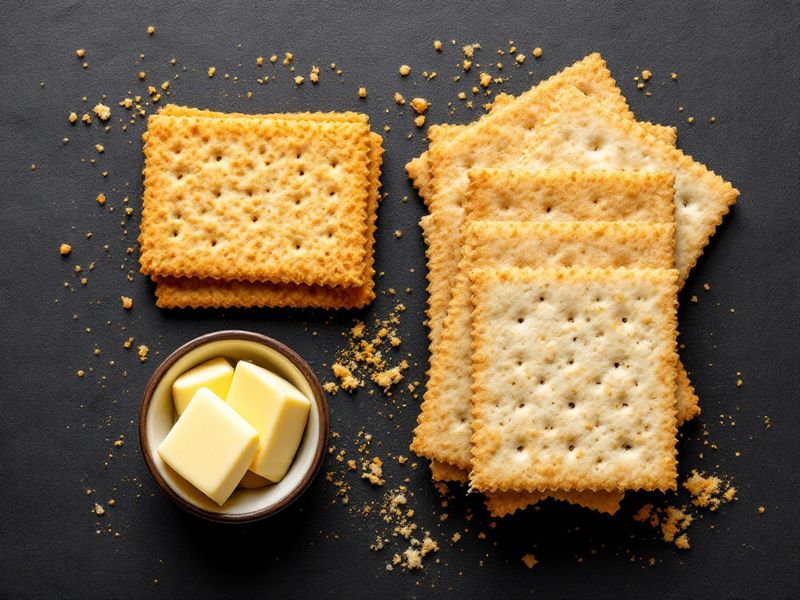
In terms of grain origin, Galbusera uses traditional soft wheat, while Misura favours ancient grains or blends of spelt and rye, often certified organic. This difference shows up in the nutritional profile and in fibre content, but also in price: Misura products tend to sit in the mid-to-high price range, while Galbusera offers a cheaper, more accessible option.
Head-to-Head Nutritional Comparison
| Nutrient (per 100 g) | Galbusera | Misura |
|---|---|---|
| Energy (kcal) | 441 kcal | 460 kcal |
| Total fat (g) | 14.6 g | 12.0 g |
| - of which saturates (g) | 2.5 g | 2.0 g |
| Carbohydrates (g) | 59.9 g | 62.0 g |
| - of which sugars (g) | 7.4 g | 6.8 g |
| Fibre (g) | 3.2 g | 5.5 g |
| Protein (g) | 13.9 g | 12.0 g |
| Salt (g) | 1.2 g | 0.8 g |
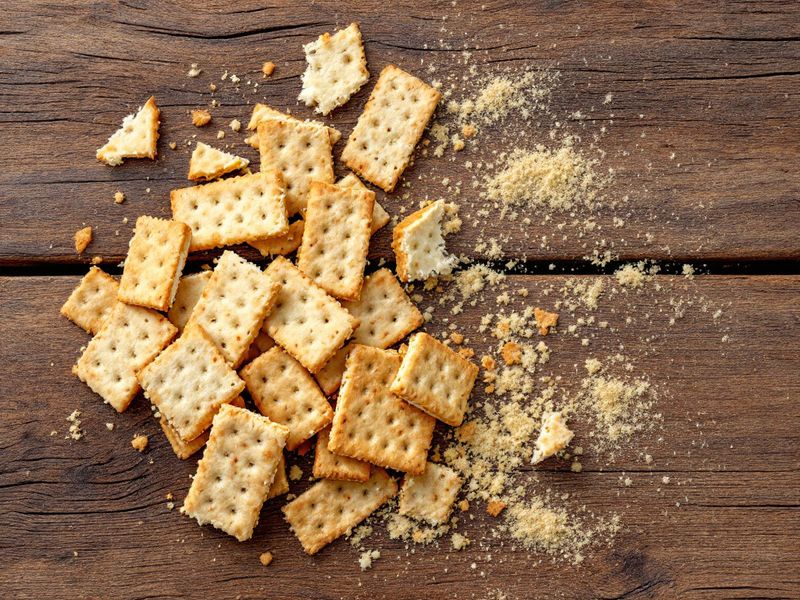
Comment: Galbusera has a slightly lower energy content than Misura, thanks to a higher share of protein (13.9 g vs 12.0 g) and a slightly lower total fat content. Misura, despite having more carbohydrates, compensates with higher fibre (5.5 g) and a lower salt content, which suits low-sodium diets. For athletes, Galbusera's protein and carbohydrate combination can support muscle recovery, while anyone on a low-salt or high-fibre diet will find Misura more suitable. To dig deeper into choosing wholegrain crackers, read our article on wholegrain crackers: how to pick the best.
In-Depth Ingredient Analysis
Galbusera - Main ingredients (per 100 g):
- Wholegrain wheat flour (100% Italian wheat)
- Refined sunflower oil
- Sesame, poppy and chia seeds (in varying proportions)
- Water, brewer's yeast, salt
- Additives: E300 (ascorbic acid), E322 (soy lecithin), E500(ii) (sodium bicarbonate), E450 (calcium diphosphate)
Misura - Main ingredients (per 100 g):
- Organic spelt flour and wholegrain rye
- Extra virgin olive oil (first pressing)
- Flaxseed and sunflower seeds
- Water, sea salt, sourdough starter
- Additives: E141 (chlorophyll), E476 (polyglycerol polyricinoleate) - the latter is a plant-based emulsifier
Additives and Technological Aids
All the additives listed are authorised by the European Union and, according to EFSA assessments, are considered safe within the limits of use set by regulation. Ascorbic acid (E300) is an antioxidant commonly used to preserve colour and freshness; lecithin (E322) helps emulsify fats and water; phosphates (E450) improve dough structure.
Misura uses E141, a natural chlorophyll-based colouring, and E476, an emulsifier derived from vegetable oils, both of which EFSA also considers safe. From a clean-label perspective, Misura has fewer additives and favours plant-derived ones, but it cannot be described as free of processing aids: legislation requires them to guarantee microbiological quality and product consistency.
How to Choose Between Them: Buyer's Guide
- Sports or muscle-recovery goal: choose Galbusera for its higher protein content and the quick energy its carbohydrates provide.
- Low-salt or high-fibre diet: Misura is the better choice thanks to its lower sodium content and the extra fibre coming from spelt, rye and flaxseed.
- Price matters: Galbusera offers a more competitive quality-price ratio, ideal for bulk buying (family, school snack).
- Clean-label and sustainability priority: Misura uses organic flours, premium vegetable oils and fewer additives, suited to consumers who pay attention to environmental impact.
- Traditional taste vs innovation: if you are after the classic taste of Italian crackers with toasted seeds, Galbusera is the answer; if you want a more rustic flavour profile with notes of hazelnut and olive, go for Misura.
Ultimately, the choice depends on your nutritional needs, budget and lifestyle preferences. Both products comply with additive regulations and offer a safe, tasty alternative for an everyday snack.
Introduction
In the world of savoury snacks, Galbusera and Misura crackers compete for top spot among Italian consumers. Both brands use E-numbers to improve crispiness, shelf life and flavour, but which are genuinely necessary and which could be avoided instead? Let's find out by comparing labels and nutrition facts, to help you make more informed choices. For a broader look at the Galbusera brand, see our dedicated Galbusera brand comparison.
Best Products on the Market
- Galbusera Crackers Classici 150 g - Esselunga
A pack of light crackers, fortified with E300 (ascorbic acid) as an antioxidant and E322 (soy lecithin) to improve texture. They provide 190 kcal per serving, 4 g of protein and 1.2 g of fibre. E-number use is limited and well balanced with natural ingredients.
- Misura Crackers Integrali 180 g - Conad
These wholegrain crackers include E410 (carrageenan) as a thickener and E471 (mono- and diglycerides of fatty acids) to keep them crumbly. They provide 210 kcal, 5 g of protein, 3 g of fibre and a moderate salt content (0.5 g). E-number content is higher than in Galbusera, but stays within safety limits.
- Misura Crackers al Sesamo 200 g - Coop
A variant richer in good fats thanks to sesame, containing E150c (caramel colour) for colouring and E322 as emulsifier. With 220 kcal, 4.5 g of protein and 2.5 g of fibre, it is ideal for those who want crispiness and flavour without overdoing the additives.
Recipes and Practical Uses
Recipe 1: Galbusera Crackers with Avocado and Lime
Ingredients:
- 4 Galbusera crackers (about 30 g)
- ½ ripe avocado, mashed
- Juice of ½ lime
- A pinch of sea salt
- Black pepper to taste
Method:
- Arrange the crackers on a serving plate.
- Mix the mashed avocado with the lime juice, salt and pepper.
- Spread the avocado cream evenly over each cracker.
- Serve immediately, ideal for a light aperitif.
Preparation time: 5 minutes.
Recipe 2: Mini Savoury Truffles with Misura and Goat Cheese
Ingredients:
- 6 wholemeal Misura crackers
- 80 g of fresh goat cheese
- 1 tablespoon of acacia honey
- 1 teaspoon of poppy seeds
- Chopped chives to taste
Method:
- In a bowl, mix the goat cheese with the honey until you get a smooth cream.
- Spread the cream on the crackers, creating a compact base.
- Sprinkle with poppy seeds and chives to add crunch and freshness.
- Arrange the mini truffles on a tray and serve as a snack for an autumn brunch.
Preparation time: 10 minutes.
Supply chain impact, packaging and conscious consumer choices. Both Galbusera and Misura use recycled plastic packaging, but Galbusera has recently introduced initiatives to reduce packaging volume, moving to lighter bags. Consumers can contribute by choosing products with environmental certifications, limiting waste and preferring larger formats to reduce the carbon footprint per gram.
Frequently Asked Questions
What is the main difference between the E-numbers used by Galbusera and Misura?
Galbusera mainly uses E300 (antioxidant) and E322 (emulsifier), while Misura also relies on E410 (thickener) and E150c (colouring). The difference is in the amount and type of additives: Galbusera is lighter in terms of E-numbers.
Are Misura wholegrain crackers healthier than classic Galbusera ones?
The wholegrain versions provide more fibre (3 g vs 1.2 g) and more whole grains, but contain more additives. If fibre content is the priority, wholegrain crackers may be preferable, provided you accept a higher presence of E-numbers.
How do E-numbers affect cracker shelf life?
Additives such as E300 (ascorbic acid) and E322 prevent fat oxidation, prolonging freshness. E410 and E471 improve texture and reduce the risk of hardening, ensuring a longer shelf life without resorting to harsher preservatives.
Final Verdict
Looking at the labels, Galbusera is more restrained in its use of E-numbers while keeping a balanced nutritional profile. Misura, on the other hand, offers wholegrain variants with more fibre but a longer list of additives. If you value simple ingredients, Galbusera crackers are the recommended choice; if you want extra fibre, you can opt for the wholegrain Misura ones, accepting slightly more E-number complexity. Explore the differences in fibre and taste in our dedicated analysis of two biscuit brands in autumn.
FoodReveal helps you decode nutrition labels beyond the marketing. Available for Android and iOS.
FoodReveal helps you decode nutrition labels beyond the marketing. Available for Android and iOS.