
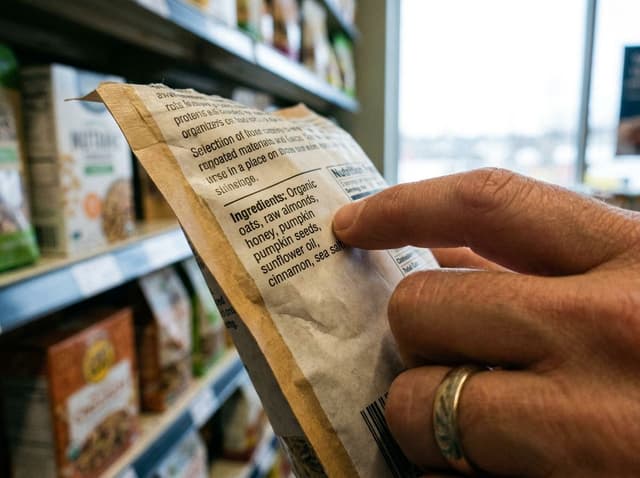
Food additives are everywhere in the products we buy — but what exactly are they? Are they dangerous? How can we make more informed decisions? This comprehensive guide, powered by your app Luminatens, helps you navigate the often confusing world of food additives. Understanding where to find them is the first step, and for that, we recommend reading our guide on how to properly read food labels Once you've spotted them, this guide will explain everything about E-numbers and INS codes
What Are Food Additives?
A food additive is defined as
“Any substance not normally consumed as food itself, nor used as a characteristic ingredient of a food, which is added intentionally for a technological purpose during processing and becomes, directly or indirectly, part of the final food product.”
In simpler terms, additives are used to
- Preserve food longer (e.g., preservatives)
- Enhance appearance, texture, or color (e.g., colorants, emulsifiers)
- Intensify flavor (e.g., flavor enhancers)
- Support industrial food processing and packaging
Main Classification of Food Additives
| Category | E / INS Codes | Function |
|---|---|---|
| Colorants | E100–E199 | Add or restore color to food products |
| Preservatives | E200–E299 | Inhibit microbial growth and extend shelf life |
| Antioxidants | E300–E399 | Prevent oxidation, rancidity, and color degradation |
| Thickeners / Emulsifiers / Stabilizers / Gelling Agents | E400–E499 | Modify texture, stabilize emulsions, form gels |
| Acidity Regulators / Anti-caking Agents / Leavening Agents | E500–E599 | Adjust pH, improve consistency, prevent clumping |
| Flavor Enhancers | E600–E699 | Amplify the flavor of existing ingredients |
| Sweeteners / Glazing Agents / Anti-foaming Agents / Misc. | E900–E999 | Add sweetness, prevent foaming, create shiny coatings, improve stability |
ℹ️Note: Some E-code families cover multiple functions. For example, the E900–E999 range includes sweeteners, anti-foaming agents, glazing agents, and other technological additives
E-numbers vs. INS Codes: What's the Difference?
| System | Label | Used in | Example |
|---|---|---|---|
| E-code | E300 | European Union | E300 = Ascorbic Acid |
| INS Number | 300 | Codex Alimentarius / Global | INS 300 = Ascorbic Acid |
- E-codes are used in the EU for approved additives
- INS numbers are the international standard often identical to E-numbers but without the "E"
How Luminatens Helps You Understand Additives
| Feature | What It Does for You |
|---|---|
| ✅ Smart Ingredient Scanning | Instantly reads ingredients from food labels |
| ✅ Advanced Recognition | Detects E-numbers, INS codes, and full chemical names |
| ✅ Color-Coded Risk Levels | Categorizes each additive: 🟥 Not Recommended, 🟧 Use Caution, 🟨 Low Risk, 🟩 Generally Safe |
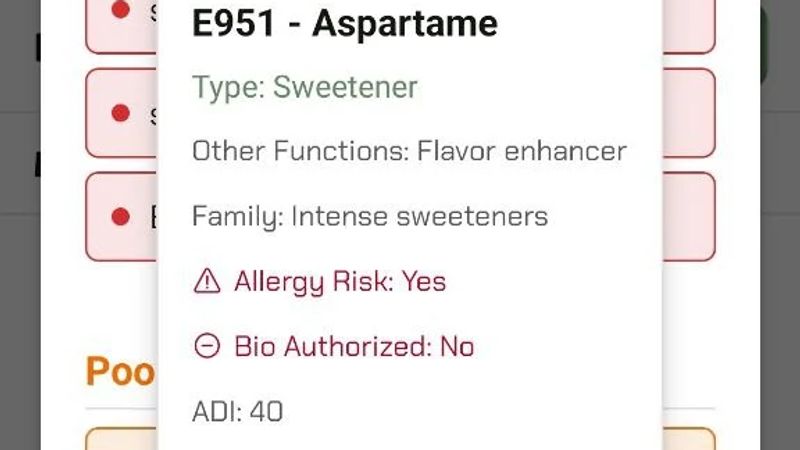
| ✅ Informative Tooltips | Offers details on purpose, additive group, organic use, and allergen risks |
| ✅ Expanded Analysis | Identifies allergens, NOVA classification, hidden sugars, oils, and sweeteners |
Food Additives and Health: What You Need to Know
- Approval and Evaluation All food additives are subject to strict evaluation by regulatory agencies such as EFSA (European Food Safety Authority) before they can be used in the food supply
- General Safety If an additive is authorized by regulatory authorities it is considered safe at commonly used levels in food products
- Individual Sensitivities Some people may experience adverse reactions or sensitivities to specific additives (e.g., sulfites, glutamate, azo dyes). It's important to remember that the amount of an additive consumed depends on the portion size. Labels can often be misleading in this regard; that's why we've created a guide on how to compare per-portion vs. per-100g values to help you understand the real quantities
- Ongoing Research Certain additives undergo continued scientific review (e.g E171 – Titanium Dioxide), and“cocktail effects”(interactions between multiple additives) are still being studied
Are There Official Lists of “Dangerous Additives”?
❌No By definition authorized additives are not classified as dangerous when used as approved
✔️ However independent researchers and consumer groups often publish their own lists of“questionable” or “potentially risky”additives based on early-stage studies or nutritional value concerns
🧠What Luminatens Does Instead
- Relies on verified scientific databases
- Offers a neutral, visual-based risk classification
- Helps you make informed decisions— not fear-based ones
⚠️Disclaimer: Luminatens is an informational tool and does not replace professional medical or dietary advice
Smart Tips for Managing Additives in Your Diet
- Always read the ingredient list It sounds simple, but it's one of the most common mistakes people make. To discover the others, you can read our guide on the 5 mistakes to avoid when reading a food label With Luminatens, this check becomes instant and effortless
- Favor fresh or minimally processed foods
- Be cautious with “cosmetic” additives— like artificial dyes or unnecessary flavoring agents
- Rotate your diet to reduce repeated exposure to specific compounds
- Pay attention to your body— consult your doctor if you suspect an intolerance or reaction
Conclusion: Luminatens Is Your Ally for Clearer Choices
With Luminatens you can
- Instantly identify food additives (E xxx, INS), allergens, and key ingredients
- Understand potential health impacts through intuitive color-coded risk levels
- Analyze product processing with NOVA classification
- Access in-depth information about each substance directly in the app
📲Download Luminatens and take control of what you read on food labels — one ingredient at a time With clarity. With confidence. With you
🔍 FoodReveal helps you decode nutrition labels beyond marketing. Available for Android and iOS.