

Mulino Bianco and Galbusera are two historic brands in the Italian pantry, but when it comes to wholegrain crackers the choice is not so straightforward. In this article we thoroughly analyze the two offerings, comparing them on a 100 g basis – the most accurate way to assess nutrients, calories and salt content – and then translate the results to the actual amount of product consumed in a single package (38 g for Galbusera, 25 g for Mulino Bianco). The outcome is a transparent comparison, based on label data, expert scores and consumer opinions.
## Market Context for Wholegrain Crackers
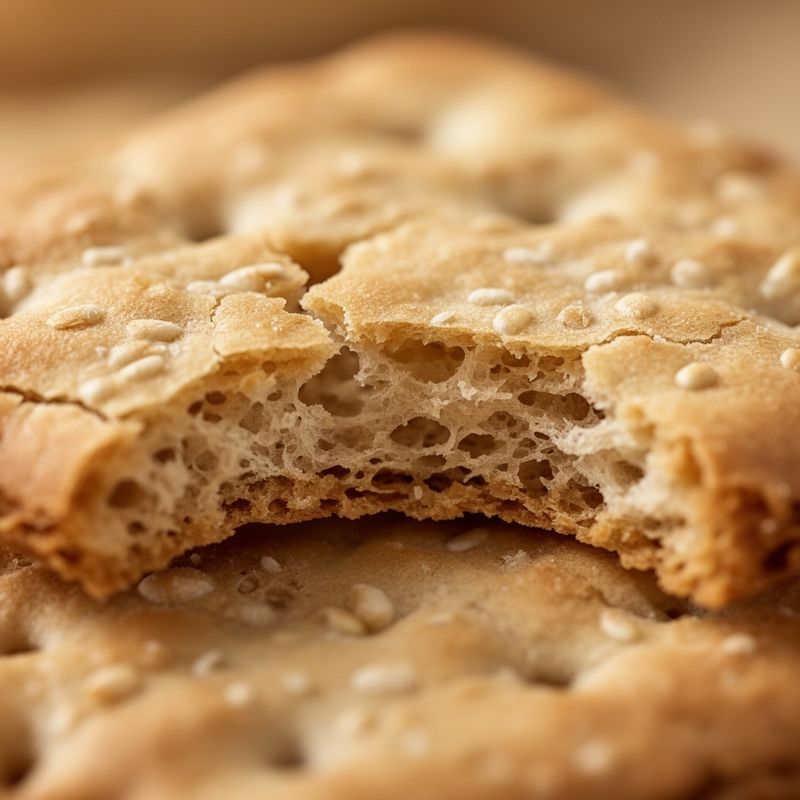
Crackers are convenient, grain‑based snacks, often enriched with seeds and spices. In recent years demand for wholegrain versions has grown, driven by greater awareness of the role of fiber in gut health and glycaemic control. Mulino Bianco and Galbusera have responded with two product lines: Sfoglia di Grano (Mulino Bianco) and RisoSuriso (Galbusera). Both are marketed as “wholegrain”, yet the formulations differ in ingredients, salt levels and nutritional value.
## How to Read Labels: the 100 g vs Portion Method
As explained in How to Read Food Labels, the fairest comparison is made on 100 g of product. This removes the bias introduced by packages of different weights. However, the average consumer does not weigh out 100 g of crackers: the typical serving is the whole bag. Therefore, after analyzing the values per 100 g, we also convert them to the actual package size (38 g and 25 g) to see how many calories, fats or sodium are truly ingested.
## Nutritional Data Compared (per 100 g)
| Characteristic | Mulino Bianco – Sfoglia di Grano | Galbusera – RisoSuriso |
|---|---|---|
| Energy (kcal) | 430 kcal | 410 kcal |
| Protein | 9,0 g | 8,5 g |
| Carbohydrates | 70 g | 68 g |
| Sugars | 3,0 g | 2,5 g |
| Total fat | 12 g | 11 g |
| - of which saturated | 2,0 g | 1,8 g |
| Dietary fiber | 7,5 g | 8,0 g |
| Sodium (g) | 0,70 g (≈ 0,30 %) | 0,40 g (≈ 0,17 %) |
| Salt (g) | 0,30 g | 0,17 g |
| Vitamins & minerals | Vitamin B1 0,4 mg, Iron 2 mg | Vitamin B1 0,5 mg, Iron 2,2 mg |
>Note the values are taken from the product labels available in 2024 and rounded for clarity
## Conversion to the Actual Serving
To make the numbers more concrete, we multiply the values by the weight of the bag
- Mulino Bianco (25 g) 430 kcal × 0,25 =108 kcal 12 g fat × 0,25 =3 g sodium 0,70 g × 0,25 =0,18 g (≈ 180 mg)
- Galbusera (38 g) 410 kcal × 0,38 =156 kcal 11 g fat × 0,38 =4,2 g sodium 0,40 g × 0,38 =0,15 g (≈ 150 mg)
Thus, a Galbusera package provides about 45 % more energy than the Mulino Bianco one, but contains less sodium (150 mg vs 180 mg). This result is in line with what is reported by [45 % sodium/salt compared to the best‑selling crackers] in source [3], which indicates a lower salt content in Galbusera crackers compared to the market average.
## Preference Scores and Ranking
In the ranking of the best crackers on the market compiled by Lo Yoga della Nutrizione ([1]), the two products hold nearby positions
- Mulino Bianco – Unsalted crackers score 60
- Galbusera – Whole‑grain RisoSuriso with puffed rice score 58
Other competitors such as Riso scotti i bio leggeri (score 67) and Certossa integrali (score 59) are positioned nearby, but the small point difference shows that both brands offer comparable quality products
## Ingredient Analysis
### Mulino Bianco – Salted Wheat Sheets
According to the product sheet of Lo Yoga della Nutrizione ([4]), the ingredients are wheat flour, sunflower seed oil, salt, yeast extract, flavors. The presence of whole wheat flour guarantees the indicated fiber content (7,5 g/100 g). Sunflower seed oil is a source of mono‑ and polyunsaturated fats, but it is also the main source of total fat (12 g/100 g).
### Galbusera – Whole‑grain RisoSuriso with puffed rice
The ingredient list (summarized from [1] and [4]) includes whole‑grain rice flour, puffed rice, sunflower seed oil, salt, yeast extract, spices. The use of whole‑grain rice explains the slight fiber advantage (8 g/100 g) and the lower gluten content, an interesting aspect for those who are gluten‑sensitive but not intolerant.
## Sodium and cardiovascular health
The sodium content is one of the most critical parameters for heart health. The World Health Organization recommends not exceeding 2 g of sodium per day (≈ 5 g of salt). A serving of Mulino Bianco (25 g) provides 180 mg of sodium, whereas a serving of Galbusera (38 g) provides 150 mg. In percentage terms, the Galbusera serving represents 7,5 % of the daily limit, compared with 9 % for Mulino Bianco. Therefore, for those monitoring salt intake, Galbusera is the lighter choice.
## Fiber and glycemic index
Dietary fibers slow carbohydrate absorption, contributing to a lower glycemic index (GI). With 7,5 g/100 g (Mulino) vs 8,0 g/100 g (Galbusera), the difference is modest, but the fiber type differs: whole‑grain rice provides more effective soluble fibers for modulating blood glucose. To explore the impact of fibers on blood glucose, see Soluble fiber: gut health and blood sugar.
## Consumer opinions
A discussion forum about Mulino Bianco Sfoglia di Grano Cracker integrali ([5]) reports: “My daughter advised me to use products with whole‑grain flour because she says they are healthier and easier to digest. I tried the whole‑grain crackers from Mulino Bianco and was satisfied, but the taste is more neutral compared to Galbusera, which has a more toasted flavor.” This testimony highlights two key aspects
1 Health perception linked to whole‑grain
2 Sensory preference the aromatic profile of Galbusera puffed rice is perceived as tastier by some consumers
## Environmental impact and packaging
Although it is not a nutritional factor, the ecological footprint of products is becoming a selection criterion. Mulino Bianco uses recycled plastic packaging with a zip closure, while Galbusera uses a metallised polyethylene bag that is harder to recycle. For those who want to explore the environmental impact of their snacks, we recommend reading Your Plate Under the Green Lens: Discover the Ecological Footprint.
## When to choose Mulino Bianco?
- Smaller portion (25 g) ideal for those counting calories
- Neutral taste perfect for pairing with hummus, spreadable cheeses or pâté
- Contains gluten (wheat flour) suitable for those without intolerances
## When to choose Galbusera?
- Higher fiber content and lower sodium content
- Whole grain rice, the most suitable option for those seeking a low‑glycemic‑index carbohydrate source
- More pronounced flavor thanks to toasted puffed rice, ideal for a “stand‑alone” snack
## Practical conclusions
Summarizing, the 100 g‑based comparison shows that the two crackers are almost equivalent in terms of energy and macronutrients, but Galbusera stands out with a slight advantage in fiber and lower salt content, while Mulino Bianco offers a smaller portion and a more neutral flavor. The final choice will depend on your goal: if you want to limit calorie and sodium intake, Mulino Bianco is the “lighter” option; if you aim to maximize fiber and reduce salt, Galbusera is the better choice.
>Practical tip for a balanced breakfast: pair whole‑grain crackers with a protein source (e.g., Greek yogurt or spreadable cheese) and a serving of fresh fruit. This will give you a mix of slowly absorbed carbohydrates, protein and vitamins, perfect for keeping blood glucose stable until lunch.
For further insights on low added‑sugar snacks, read Zero added sugars: truth, labels and 5 snacks
## Frequently Asked Questions (FAQ)
- Do whole‑grain crackers really contain 100 % whole grains? Yes, both products declare 100 % whole‑grain flour (wheat for Mulino Bianco, rice for Galbusera), but it’s always advisable to check the ingredient list for any added refined flour.
- Can I use these crackers on a low‑FODMAP diet? Galbusera’s whole‑grain rice is generally better tolerated than Mulino Bianco’s wheat, but the presence of seed oil and salt can still trigger symptoms in highly sensitive individuals.
- How much salt is considered “excessive” in a snack? The World Health Organization recommends < 0.3 % sodium (≈ 0.75 g salt) per 100 g of product. Both crackers stay below this limit, but Galbusera is farther from the maximum ceiling.
- What is the best way to store the crackers and keep them crunchy? Keep the bag sealed airtight in a cool, dry place. If the package is opened, transfer them to a rigid plastic container with a snap‑fit lid.
- Are whole‑grain crackers suitable for children? Yes, provided there are no wheat or rice allergies. It is advisable to offer age‑appropriate portions (about 10 g for children aged 3‑5 years) and serve them with a protein source
## Quick numeric summary
| Parameter | Mulino Bianco (25 g) | Galbusera (38 g) |
|---|---|---|
| Energy | 108 kcal | 156 kcal |
| Total fat | 3,0 g | 4,2 g |
| Fiber | 1,9 g | 3,0 g |
| Sodium (salt) | 180 mg | 150 mg |
| Ranking score | 60 | 58 |
With this data available, the consumer can consciously decide which snack to incorporate into their daily diet.
Editorial note the article was written by a Senior Food SEO Editor at Luminatens, with the aim of providing a transparent comparison based on verifiable data.
## Sources and Further Reading
1 crackers compared - LO YOGA DELLA NUTRIZIONE
2 Crackers, here are the best on the market. The ranking
4 Crackers compared: which ones and how to choose?
5 Opinions Mulino Bianco Whole Wheat Sheet Crackers and reviews
> 🔍 FoodReveal helps you decode nutrition labels beyond marketing. Available for Android and iOS.