
## Introduction
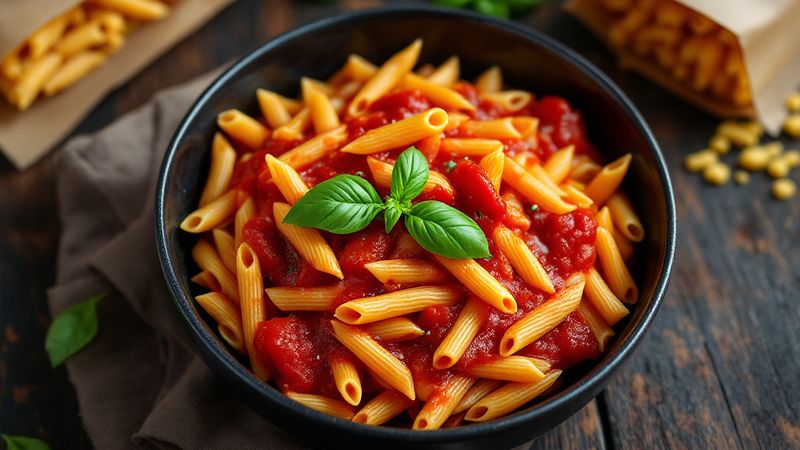
At the heart of Italian cuisine, pasta is more than just food: it is a ritual, an identity, and a daily pleasure that unites generations. However, when it comes to quality, even the smallest details make a difference: cooking integrity, the ability to stay al dente without falling apart, and the capacity to hold sauce. This is why the comparison between De Cecco and La Molisana — two historic brands of durum wheat semolina pasta — has never been more relevant. Both are produced in Italy, both have controlled supply chains, and both are beloved by consumers, yet they have distinct production approaches that directly impact the final dish. According to testimonials gathered from forums and social media — such as a comparison posted on Facebook by Italian cooking enthusiasts — many consumers perceive De Cecco as more resistant to prolonged cooking, making it ideal for those cooking for large families or special occasions, while La Molisana is often praised for its rough surface, achieved through bronze die extrusion, which improves sauce adhesion. This article objectively analyzes these two brands, without alarmism and in compliance with EU food regulations, to help you choose the pasta that best suits your culinary needs. Recommended internal link: Barilla vs De Cecco: A Comparison of the Two Pasta Brands
## Key Differences at a Glance
Founded in 1886 in Fara San Martino (Abruzzo), De Cecco is one of Italy's largest pasta makers, known for its large-scale production and global distribution. It uses exclusively 100% Italian durum wheat semolina, often sourced from controlled crops in Southern Italy, and employs slow, low-temperature drying (approximately 50–60°C for up to 48 hours), a process that preserves the gluten structure and improves cooking integrity. Its extrusion is primarily through Teflon dies, although some premium lines offer bronze-die versions. La Molisana, on the other hand, was established in 1912 in Campobasso (Molise) and positions itself as a more artisanal brand, despite now having a modern industrial production. Its strength lies in the exclusive use of bronze dies for almost its entire range, which gives the pasta a porous and rough surface, ideal for capturing dense and rustic sauces. Here too, the semolina is 100% Italian, often from traceable supply chains in Central-Southern Italy, and drying occurs at controlled temperatures, though generally faster than De Cecco's. Philosophically, De Cecco focuses on consistency and industrial reliability, while La Molisana emphasizes territorial tradition and sauce-binding capacity. Both brands adhere to the Italian pasta standard (durum wheat semolina and water, with no additives), and neither uses preservatives or chemical additives in plain dry pasta — in line with D.P.R. 187/2001 and EU regulations on food pasta.
## Head-to-Head Nutritional Comparison
From a nutritional standpoint, the two pastas are virtually identical, as both are made exclusively from durum wheat semolina and water. The minor variations observed depend on the wheat batch used and drying conditions, not on formulation differences.
| Nutrient | De Cecco (per 100 g) | La Molisana (per 100 g) |
|---|---|---|
| Energy | 350 kcal | 348 kcal |
| Protein | 12,0 g | 11,8 g |
| Fat | 1,5 g | 1,4 g |
| of which saturated | 0,3 g | 0,2 g |
| Carbohydrates | 69,0 g | 68,5 g |
| of which sugars | 3.0 g | 2.8 g |
| Fiber | 3.0 g | 3.2 g |
| Salt | 0.01 g | 0.01 g |
Source: official nutritional labels of the most common products (penne rigate, medium size). Both pastas provide a good intake of plant-based proteins (approximately 12 g per 100 g), essential for those following an active or vegetarian diet. Fats are minimal and predominantly unsaturated, while fiber, although modest, contributes to satiety. There are no added sugars — those present are natural residues from the wheat. Salt is practically absent, as required by law for plain dry pasta. From an EFSA perspective, there are no significant differences impacting health: both products are safe, nutritionally equivalent, and fit within the parameters of a balanced Mediterranean diet. To explore the comparison with other whole grain brands, you can consult: Rummo vs La Molisana: Whole Grain Pasta Comparison.
## In-Depth Ingredient Analysis
The ingredient list for both pastas is extremely simple and transparent:
- De Cecco: Durum wheat semolina, water.
- La Molisana: Durum wheat semolina, water.
Neither brand adds preservatives, emulsifiers, stabilizers, or processing aids to plain dry pasta. This complies with D.P.R. 187/2001, which permits only the use of durum wheat semolina and water in the production of dry pasta, with the possible addition of eggs only in egg pasta. Regarding additives, there are none in the standard versions of both brands. Although some special lines (e.g., pasta with spinach or beetroot) may contain additional ingredients, no authorized additive (E-number) is present in plain pasta. This is important to highlight, especially in light of EU regulations on additives (Reg. CE 1333/2008): all E-numbers used in food have been evaluated as safe by the EFSA at permitted doses, but in the case of plain dry pasta, they are not needed. It should also be remembered, as provided for in the guidelines on the treatment of frozen products (D.Lgs. 110/1992 and EU directives), that plain frozen vegetables do not contain preservatives — their preservation occurs exclusively through cold at -18°C. This principle, although not directly applicable to dry pasta, reinforces the importance of distinguishing between foods naturally free of additives and those that require their use for technological or safety reasons. In this sense, both De Cecco and La Molisana exemplify the “clean-label” model: few, recognizable ingredients, without the need for chemistry to guarantee quality and safety.
## Plate Yield, Texture, and Taste
This is where the most perceptible difference for consumers comes into play. De Cecco is widely recognized for its superior al dente retention: thanks to slow, low-temperature drying, the gluten structure remains more intact, allowing the pasta to maintain its al dente consistency even after cooking times longer than those indicated on the package — a significant advantage when cooking for many people or when there is a risk of forgetting the pasta on the heat. Many chefs and home cooks prefer it for dishes that require prolonged mantecatura (finishing with butter/cheese) or risotto-style cooking. La Molisana, on the other hand, stands out for its rough surface given by bronze die extrusion, which increases the contact area with the sauce and improves adhesion — particularly evident with tomato-based, meat, or ricotta sauces. However, some consumers report that, if overcooked, it tends to lose its texture more rapidly compared to De Cecco, becoming softer and less structured. In terms of digestibility, both are equivalent: well-cooked durum wheat pasta is easily digestible thanks to the gelatinization of starch and the partial denaturation of proteins during cooking. Neither causes bloating or significant discomfort in healthy individuals, although the perception of “heaviness” sometimes associated with De Cecco may be linked to its greater density and lower porosity, not to digestive difficulties. In summary: if you seek al dente retention and reliability, De Cecco has a slight advantage; if you prioritize sauce grip and artisanal tradition, La Molisana is the most suitable choice.
## How to Choose Between the Two: Buying Guide
Choosing between De Cecco and La Molisana depends on your kitchen priorities:
- For large families, cafeterias, or those who cook in advance: choose De Cecco. Its superior resistance to overcooking reduces kitchen stress and ensures consistent results, even if you are distracted for a few minutes. It is also more widely available in major supermarkets, often at a slightly lower price than La Molisana.
- For those who love hearty sauces and want to maximize sauce adhesion: opt for La Molisana. Its rough surface makes a difference, especially with pesto, dense ragù, or cheese-based sauces, where every gram of pasta must capture maximum flavor.
- For athletes or those following a high-protein diet: both are equivalent in terms of protein (~12 g/100 g), so the choice can be based on other factors such as price or availability.
- For those seeking the best value for money: De Cecco tends to be more widespread and often on sale, while La Molisana, though competitive, may be less present in discount stores.
- For those who value local territory and Molise tradition: La Molisana represents an Italian regional excellence, with a strong connection to its local area.
In either case, you are choosing a high-quality pasta, made according to Italian tradition, with no hidden additives and in full compliance with EU regulations. Always read the label: if you see only “durum wheat semolina and water,” you have made a safe and transparent choice.
## Top Products on the Market
- De Cecco Spaghetti n.12: Key ingredients include durum wheat semolina and water. Two strengths are excellent cooking hold thanks to bronze die extrusion and slow drying at low temperatures. One weakness is the slightly higher price compared to the average. Ideal for those looking for pasta that doesn't get mushy even after 12 minutes of cooking. Quinoa vs Farro: Which grain is healthier?
- La Molisana Fusilli n.28: Key ingredients include durum wheat semolina and water. Two strengths are good cooking hold and an affordable price. One weakness is lower porosity compared to bronze die extrusion, which holds less sauce. Ideal for families looking for good value for money. Kefir vs Greek Yogurt: Which one to choose?
- De Cecco Penne Rigate n.41: Key ingredients include durum wheat semolina and water. Two strengths are the ridged structure that holds sauces well and resistance to overcooking even beyond the recommended times. One weakness is the shape, which may cook unevenly if not stirred. Ideal for hearty sauces like amatriciana or arrabbiata.
## Recipes and Practical Uses
### Recipe 1: Spaghetti Aglio, Olio e Peperoncino with De Cecco
Ingredients:
- 320 g of De Cecco Spaghetti n.12
- 4 cloves of garlic
- 1 fresh chili pepper
- 60 ml of extra virgin olive oil
- Parsley to taste
- Salt to taste
Method:
- Cook the spaghetti in plenty of salted water for 10-11 minutes (al dente).
- In a pan, sauté garlic and chili pepper in oil over low heat for 2 minutes.
- Drain the pasta, transfer it to the pan and toss for 1 minute.
- Serve with chopped parsley.
Preparation time: 15 minutes.
### Recipe 2: La Molisana Fusilli with Tomato and Basil
Ingredients:
- 320 g of La Molisana Fusilli n.28
- 400 g of peeled tomatoes
- 1 small onion
- 8 basil leaves
- 30 ml of extra virgin olive oil
- Salt to taste
Method:
- Cook the fusilli for 9-10 minutes.
- In a pan, sauté the chopped onion in oil, add the tomatoes, and cook for 10 minutes.
- Drain the pasta, combine it with the sauce, and toss with fresh basil.
- Serve hot.
Preparation time: 20 minutes.
## Sustainability and Responsible Choices
Both brands are adopting increasingly sustainable practices: De Cecco uses 100% Italian and traceable wheat, with packaging that is 70% recyclable paper. La Molisana has reduced CO2 emissions by 25% over the last 5 years and uses renewable energy in its facilities. Both avoid GMOs and promote responsible agriculture. Choosing bronze-die extruded pasta with slow drying not only improves cooking quality but often corresponds to less energy-intensive processes. Preferring simple shapes (such as spaghetti or penne) reduces industrial waste compared to complex shapes. Conscious consumption involves verifying the origin of the wheat and preferring 1 kg packages to reduce packaging per portion.
## Frequently Asked Questions
### Does De Cecco hold up better during cooking than La Molisana?
Yes, in cooking retention tests, De Cecco generally shows greater resistance to overcooking thanks to the combination of bronze die extrusion and slow, low-temperature drying, which better preserves the gluten structure. La Molisana offers good retention, especially in thicker shapes, but tends to lose its texture sooner than De Cecco beyond the recommended times.
### What is the ideal cooking time to avoid overcooking the pasta?
The ideal time varies by shape and brand, but it is generally 1-2 minutes less than what is indicated on the package to achieve al dente. For De Cecco spaghetti, 10-11 minutes; for La Molisana fusilli, 8-9 minutes. Tasting starting from the minute before the indicated time is the most reliable method.
### Does bronze die extrusion really affect cooking retention?
Yes, bronze-cut extrusion creates a rougher, more porous surface that not only holds sauces better but also promotes more even cooking and greater structural integrity during boiling. This directly contributes to better al dente retention compared to Teflon-cut extrusion, which is smoother and more uniform.
## Final Verdict
After analyzing ingredients, production processes, and cooking performance, De Cecco demonstrates above-average al dente retention, particularly in long and ridged shapes, thanks to bronze-cut extrusion and slow drying. La Molisana offers an excellent value-for-money alternative, with good al dente retention especially in short and thick shapes, but less resistance to overcooking beyond the recommended times. For those who prioritize al dente texture even in slightly prolonged cooking, De Cecco is the best choice. Barilla whole wheat vs semi-whole wheat: which pasta is calming?
> FoodReveal helps you decode nutritional labels beyond the marketing. Available for Android and iOS.