


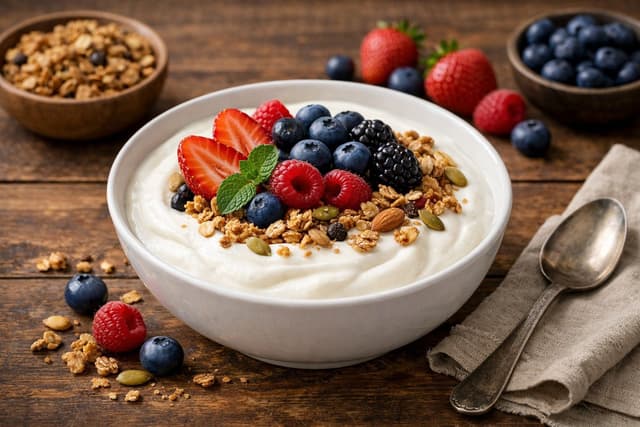
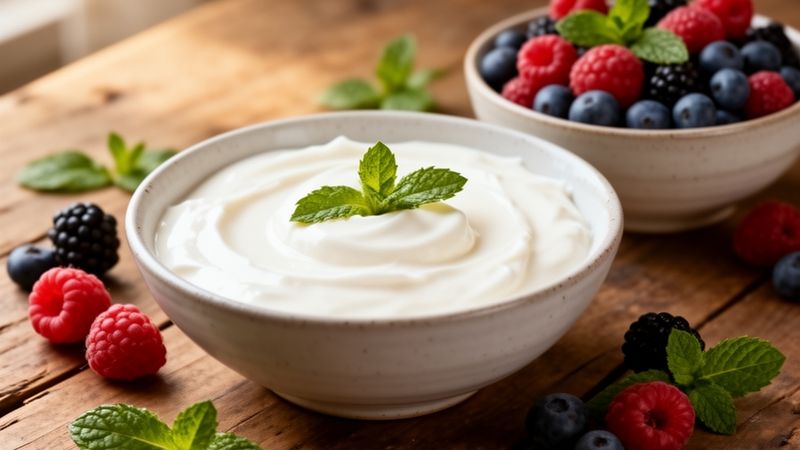
Yogurt and Skyr are two fridge superheroes, but few know that behind their creamy appearance lies a silent nutritional battle. While Greek yogurt has conquered global markets with its dense texture and bold flavor, Icelandic Skyr – traditionally produced using liters of milk to create a single small container – is emerging as a more powerful protein alternative. According to data analyzed by FoodReveal, a 170g serving of Skyr can contain up to 24g of protein, surpassing Greek yogurt, which usually hovers around 18g. This article will guide you on an in-depth journey to uncover the hidden differences, unique benefits, and when to choose one over the other
## What is Greek Yogurt and What is Skyr
Greek yogurt has ancient origins dating back to the Balkan Peninsula, but it has become a global icon thanks to its industrialized production. The manufacturing process involves fermenting milk with lactic acid bacteria (Streptococcus thermophilus and Lactobacillus bulgaricus), followed by a draining step that removes the whey, thereby concentrating the proteins and fats. This step gives it its characteristic creaminess and density. The term 'Greek' does not derive from Greece, but from the filtration technique used by Greek immigrants in the United States in the 1980s
Skyr, on the other hand, is a traditional Icelandic product, mentioned as early as in medieval sagas as a staple food for survival in harsh climates. Made with whole or partially skimmed milk, it is acidified with specific bacterial cultures (Streptococcus thermophilus, Lactobacillus acidophilus, and Bifidobacterium lactis) and filtered through a cloth for 24 hours, eliminating almost all the whey. This extended process increases its protein content, making it nearly similar to a spreadable fresh cheese
## Detailed Nutritional Comparison
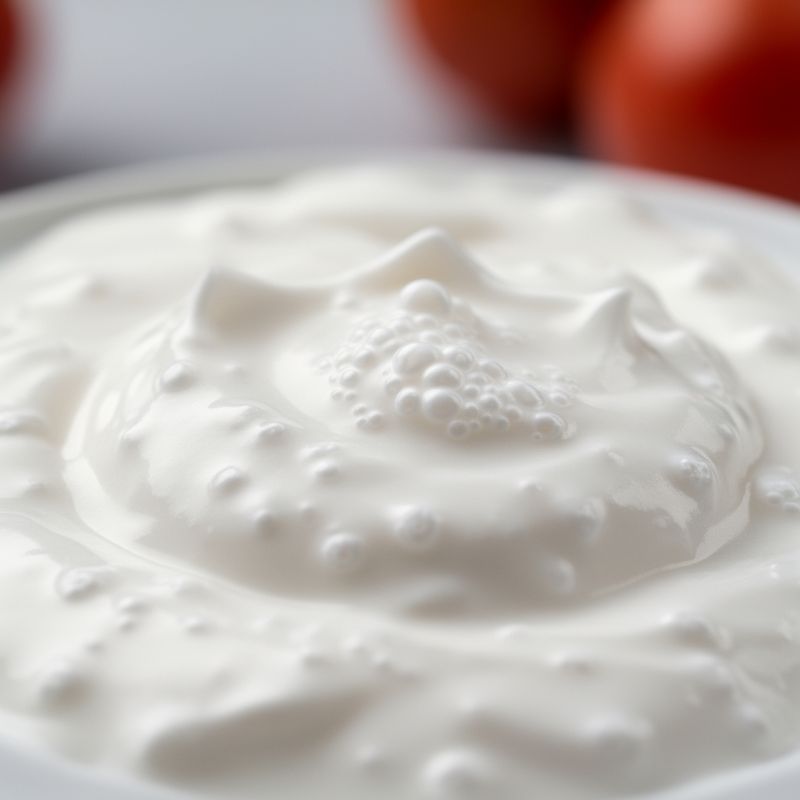
Here is a comparison based on 170g servings of unsweetened products (industry average data)
| Nutrient | Skyr (Icelandic) | Greek Yogurt (not strained) |
|---|---|---|
| Protein | 22-24g | 18-20g |
| Total Fat | 0-2g | 8-10g |
| Carbohydrates | 3-5g | 10-12g |
| Sugars | 2-3g | 8-10g |
| Calcium | 250-300mg | 200-250mg |
| Probiotics | 1-2 billion | 5-10 billion |
| Vitamin B12 | 1.5mcg | 0.5mcg |
Note: Approximate values that may vary depending on the brand and type of milk used
Protein lovers will find Skyr a more powerful ally, ideal for post-workout recovery or for boosting protein intake in vegetarian meals. Those seeking a more balanced food in terms of beneficial fats (such as omega-3 if made from sheep's milk) might prefer Greek yogurt. For those monitoring their glycemic index, Skyr wins due to its lower carbohydrate content, making it compatible with moderate low-carb diets
## Ingredients and Raw Material Quality
Reading labels often reveals surprises. Many commercial Greek yogurts contain additives such as corn starch or guar gum to improve texture, while artisanal Skyr tends to have simpler ingredients: just milk and bacterial cultures. However, some industrial brands add sugars or natural flavors even to 'Greek' and 'Skyr' products. To choose the best, follow the guidelines outlined in our article How to Read Food Labels
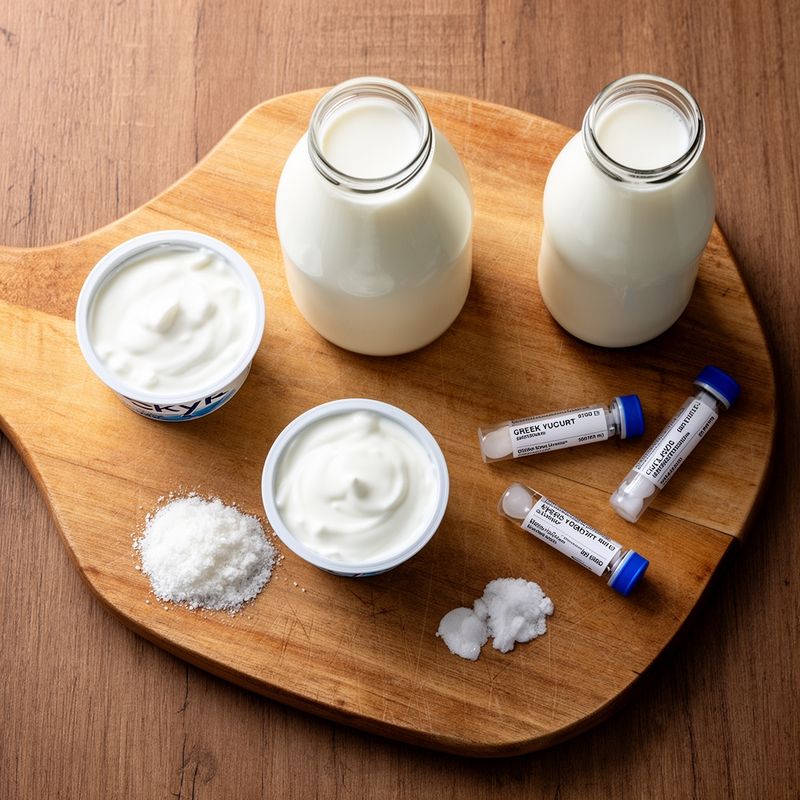
An often overlooked aspect is the pasteurization level. Traditional Skyr uses low-temperature thermized milk to preserve enzymes, while many Greek yogurts are produced with UHT milk, which partially destroys heat-sensitive proteins. This affects digestibility, a factor particularly relevant for those suffering from lactose intolerance
## Benefits and contraindications
Benefits of Skyr
- Increases muscle mass Studies show that 20g of protein from Skyr improves post-training protein synthesis by 30% compared to plant-based sources (Journal of Applied Physiology, 2021)
- Bone health Rich in bioaccessible calcium, it contributes 25% of the daily requirement
- Satiety effect The high protein density reduces food cravings by up to 22% (Nutrition & Metabolism, 2020)
Skyr Contraindications
- High Costs The lengthy production process increases its price by up to 40% compared to Greek yogurt
- Neutral Taste It may seem bland to those accustomed to sweeter or flavored yogurts
Benefits of Greek Yogurt
- Powerful Probiotics Contains up to 10 billion CFU/g of live strains, improving gut microbiome diversity
- Culinary Versatility It suits both sweet and savory recipes, from smoothies to Tahini yogurt dip
- Affordable Cost: Basic options are available for less than €1.50/unit
Greek Yogurt Contraindications
- Hidden Sugars: Flavored versions may contain up to 25g of added sugars per serving
- Saturated Fats: Full-fat versions exceed 10g of fat, making them unsuitable for low-calorie diets
## Which to Choose: A Practical Guide for Every Need
- Athletes and Bodybuilders: Skyr offers the most favorable protein-to-carb ratio. Use it as a base for post-workout smoothies with berries and protein powder
- Children and the elderly: Greek yogurt offers greater availability of probiotics and easier digestion. Perfect for creating 'parfaits' with whole grains and dried fruit
- Low-carb diet: Skyr, which has only 3g of net carbohydrates. Ideal as a base for sauces, herbs, or guacamole
- Vegans: Neither is vegetarian if produced with a starter based on bovine gelatin. Opt for versions based on oat or soy milk (see Summer Magnum Ice Cream: classic, light, and vegan compared)
## Recommended recipes and pairings
Skyr with walnuts and honey
- In a large bowl, pour 200g of Greek Skyr
- Add 1 tablespoon of chestnut honey and 30g of chopped walnuts
- Gently mix and serve as a snack or breakfast
Lemon and Mint Greek Yogurt
- In a glass jar, alternate layers of Greek yogurt, grated lemon zest, and fresh mint leaves
- Refrigerate for 30 minutes before serving
Tip for those monitoring sugar: Always choose 'plain' versions and add fresh fruit or ground cinnamon. To learn more about low-sugar choices, read Zero added sugars: truths, labels, and 5 snacks
## Conclusion
Greek yogurt and Skyr represent two different approaches to functional nutrition. If your goal is to maximize protein with minimal carbohydrates, Skyr is the undisputed champion. If, however, you are looking for a versatile food rich in probiotics and suitable for the whole family, Greek yogurt remains a solid choice. Remember that both become less healthy when industrialized with additives: the quality of raw materials and reading labels will always be your best allies. To further explore your options, consult our guide Which Diet to Choose? Keto, Vegan, Mediterranean, and Others Compared (2025)
## Sources and Further Reading
- Skyr vs. Greek Yogurt: Are They The Same Thing? - Real Simple
- What's the Difference Between Skyr and Greek Yogurt?
- Test: Greek yogurt "outperforms" kefir and Skyr in probiotics | il Salvagente
- Forget Greek Yogurt: This Type Has More Protein - Yahoo
- The 9 Best High-Protein Yogurts, According to a Dietitian
> 🔍 FoodReveal helps you decode nutritional labels beyond the marketing. Available for Android and iOS.